← Selected work

Insurance operations

COI Compliance

Our team built a certificate-of-insurance workflow for a dispatch network: carrier intake, Sensible OCR, requirements checks and follow-up through resubmission.

  • Sensible OCR
  • Custom rules engine
  • Carrier portal

Updated 2026-10-25

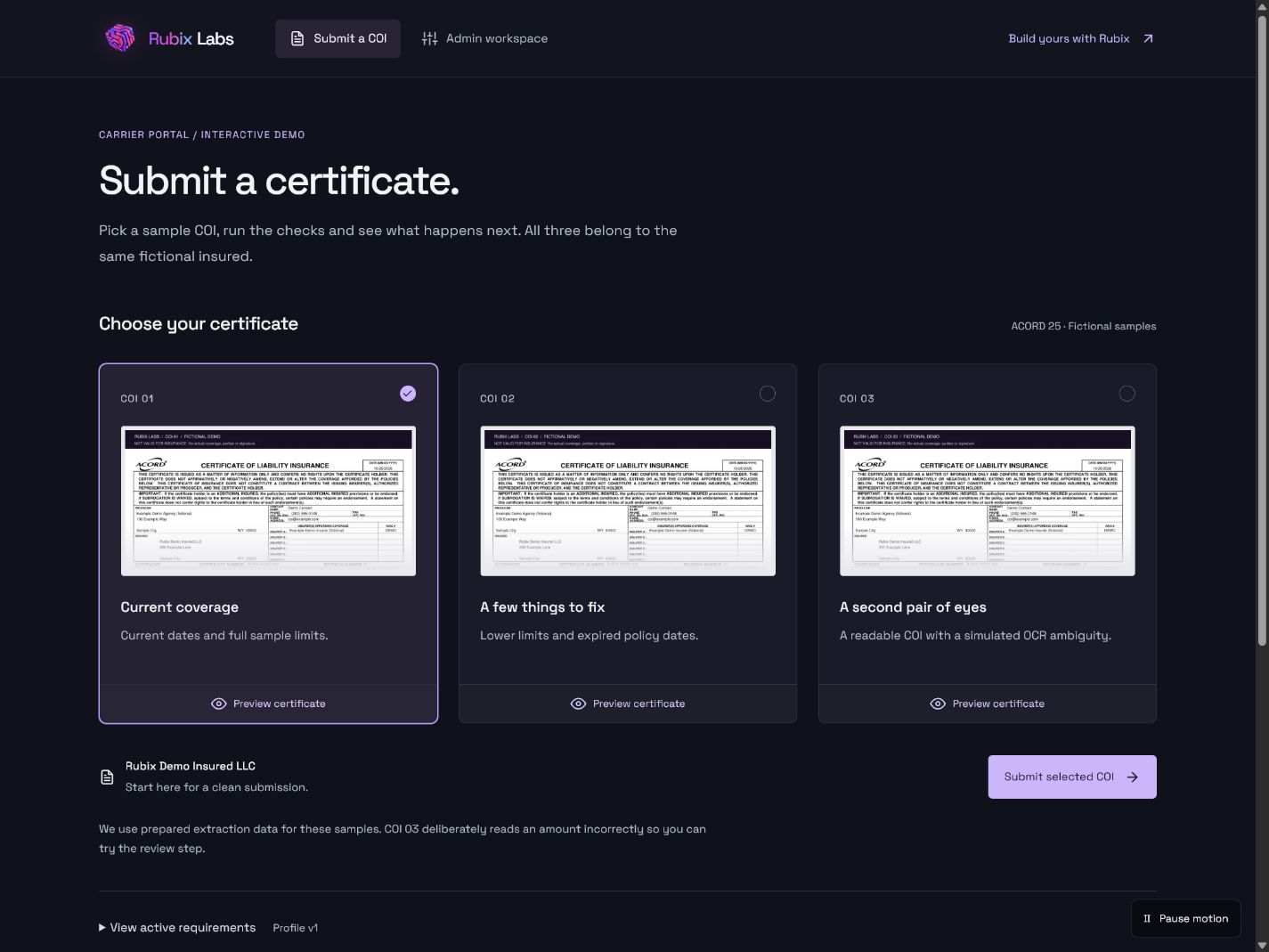
Rubix COI demo reconstruction showing three fictional ACORD certificates and a submission action
A certificate gets a next step.Public demo / fictional data
Public demo reconstruction, not the client interfaceView image ↗

The challenge

What needed to be easier.

The network needed to know whether each carrier's certificate met its insurance requirements. Reading a PDF was only part of the job. Someone also had to check the extracted details, explain any deficiencies and keep track of the next submission.

Our approach

How we built it.

We connected COI intake to Sensible for document extraction, then passed the parsed fields to our own rules engine. The engine evaluated those fields against the network's requirements. Its result determined the carrier's next step: confirmation, or a list of issues to fix before resubmitting.

Inside the experience

The follow-up was part of the product.

A visual guide to the published product scope.

  1. 01

    Carrier submits

    A COI enters the intake flow.

  2. 02

    Sensible extracts

    Document fields become structured data.

  3. 03

    Rules evaluate

    Requirements checks identify compliance or deficiencies.

  4. 04

    Carrier responds

    Confirmation closes the loop; deficiencies lead to correction and resubmission.

Conceptual illustration · Based on public capabilities, not a private architecture diagram.

Our contribution

An anonymized account of our team's earlier delivery for a dispatch network. The companies submitting certificates handled dispatch operations for that network. Client and partner identities, actual requirements and customer documents remain private.

Our contribution covered the carrier submission flow, Sensible OCR integration, custom requirements evaluation and the carrier communication loop. We connected these pieces so the result of a document check led to a specific next action.

What the delivered workflow enables

The delivered workflow connected document intake to a requirements decision and the next carrier response. A carrier with deficiencies had something specific to act on and a route back into the same process. The submission, result and follow-up belonged to one workflow.

Engineering considerations

Separating extraction from the requirements engine gave each part a clear responsibility. OCR supplied field values; business rules evaluated them. A failed check also had to be useful to the carrier, because a status alone wouldn't explain what to fix. The public demo below illustrates that distinction with fictional documents and a small teaching rule set.
Try the workflow

Try both sides of the workflow.

We rebuilt a small version for the Rubix site with fictional sample certificates. Submit an ACORD COI, inspect the result, then switch to the admin workspace.

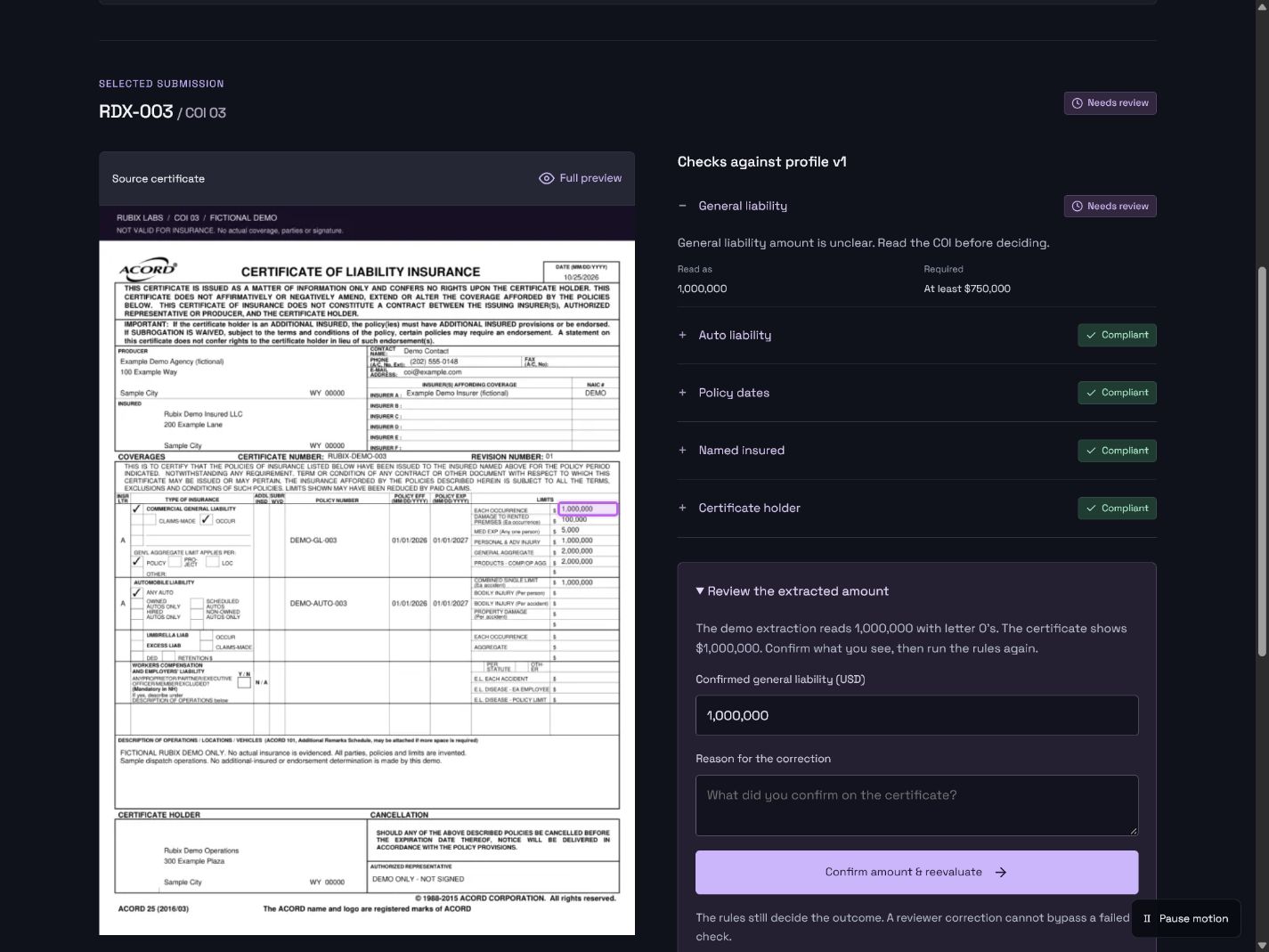
The demo adds a deliberately ambiguous extracted amount, editable teaching requirements and visible decision history. These illustrate how a similar tool can work today; they aren't a claim about the original client's exact interface or controls.

Rubix demo admin showing a fictional ACORD certificate beside its requirements checks and a manual correction form
A source document beside the decision. Screenshot of the public Rubix demo. The sample extraction deliberately misreads an amount so visitors can try correcting it and checking the rules again.

Planning your own COI tool?

Rubix can help work through your intake, extraction choices, requirements and carrier follow-up. The build guide covers the implementation questions; a project conversation starts with the process your team needs.

Discuss your COI workflow

All screenshots show fictional data. The demo uses simulated extraction, sends no emails and makes no insurance acceptance decision. The original client system and source code are private.

Related case study

Document OCR

We built an in-house OCR workflow that extracts driver license data, reduces manual entry, and gives operations teams a review step.

Rubix Labs

A few finishing touches.